Japan's tourism engine is running at full throttle: a record 36.9 million international visitors in 2024, spending an all-time-high ¥8.1 trillion (JNTO). Yet outside the major cities, quality accommodation remains scarce — and that gap is exactly where glamping, and the trailer house, come in.
The opportunity: experiences, not just beds
Japanese domestic travelers and inbound tourists alike are shifting spend toward nature-based, experience-rich stays. Glamping — camping with hotel comforts — commands significantly higher nightly rates than conventional pensions or minshuku, especially among couples and families who would never pitch a tent. The constraint has never been demand; it is the cost and speed of building guest rooms in rural locations.
Why trailer houses change the math
Low capex, fast deployment
A NESTERRA unit arrives factory-finished — hotel-grade shower, separate toilet, kitchen, air conditioning — and needs only minimal site work. No lengthy construction, no building-permit process when properly installed as a vehicle. You can be hosting guests in a fraction of the time a build would take.
Scale one unit at a time
Start with one or two units, measure occupancy, then add capacity in single-unit increments. This staged deployment is nearly impossible with conventional construction — and it dramatically reduces the risk of overbuilding.
An exit no hotel has
If the market shifts, a building must be demolished or sold with the land. A trailer house is a titled vehicle: relocate it to a stronger market, or resell the unit itself. Your downside is structurally different from that of fixed hospitality assets.
The rules you must respect
Japan treats paid lodging seriously. Operating a glamping business requires a license under the Hotel Business Act (Ryokan-gyo Ho) — typically the "simplified lodging" (kan-i shukusho) category — plus fire-safety equipment and an inspection sequence that runs fire department first, then public health center. Unlicensed operation carries penalties of up to six months' imprisonment or a ¥1,000,000 fine. None of this is prohibitive; it simply rewards investors who prepare properly. Local administrative scriveners (gyoseishoshi) handle these filings routinely.
How the numbers work
Revenue is nightly rate × occupancy × units. On the cost side, two Japan-specific advantages apply: a properly installed trailer house incurs no fixed asset (property) tax, and for business use it depreciates over a statutory four years — front-loading deductions in the years you need them most. (Tax treatment varies by installation and municipality; confirm with a licensed tax accountant.)
Sources & further reading
- JNTO visitor statistics — record 36.9M visitors in 2024: nippon.com summary
- Hotel Business Act (Ryokan-gyo Ho), Act No. 138 of 1948: e-Gov (Japanese)
- Vehicle status under the Building Standards Act — municipal guidance: Kisarazu City (Japanese)
This article is general information as of September 2026, not investment, legal or tax advice. Regulations and their local application change; consult licensed Japanese professionals before committing capital.
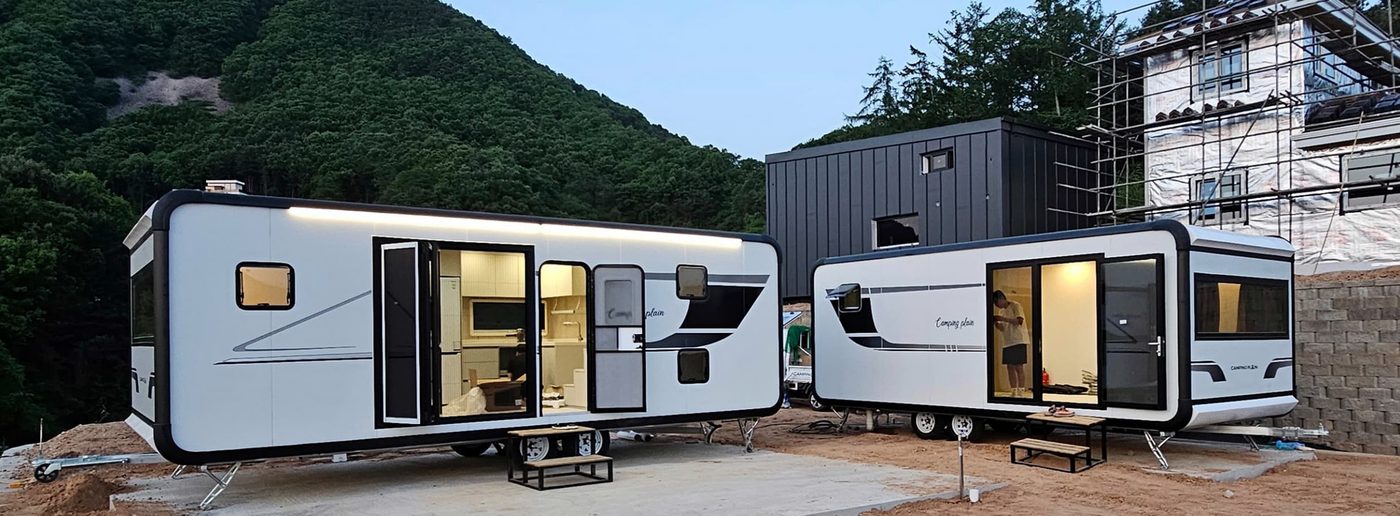
See the asset before you invest.
Spend a free night in our display unit at the Yamami Exhibition Site, Aichi.
We consult with international clients in English.